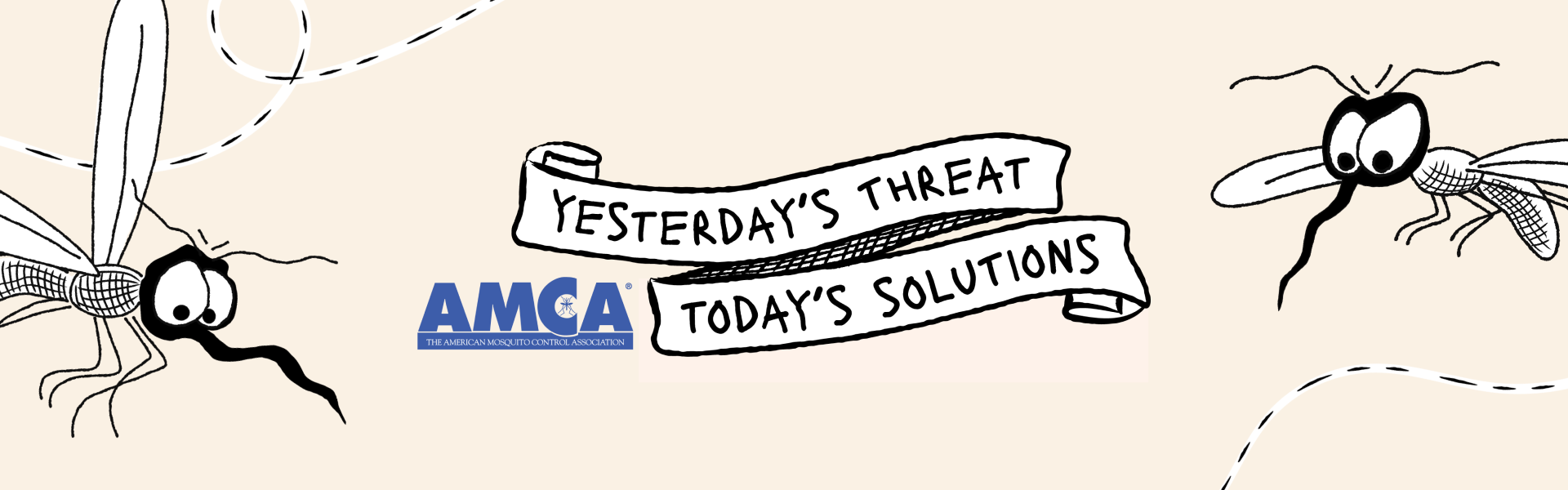
The American Mosquito Control Association, AMCA, represents mosquito control and vector-borne disease experts nationwide. With funding from the Centers for Disease Control and Prevention, the organization sought a national communications program to engage both professionals and the public.
Media Cause partnered with AMCA to build a unified communications ecosystem, including a centralized resource hub, a public-facing campaign and toolkit for local districts, conference collateral, and ongoing newsletters for key audiences.
Client Overview
Issue Area
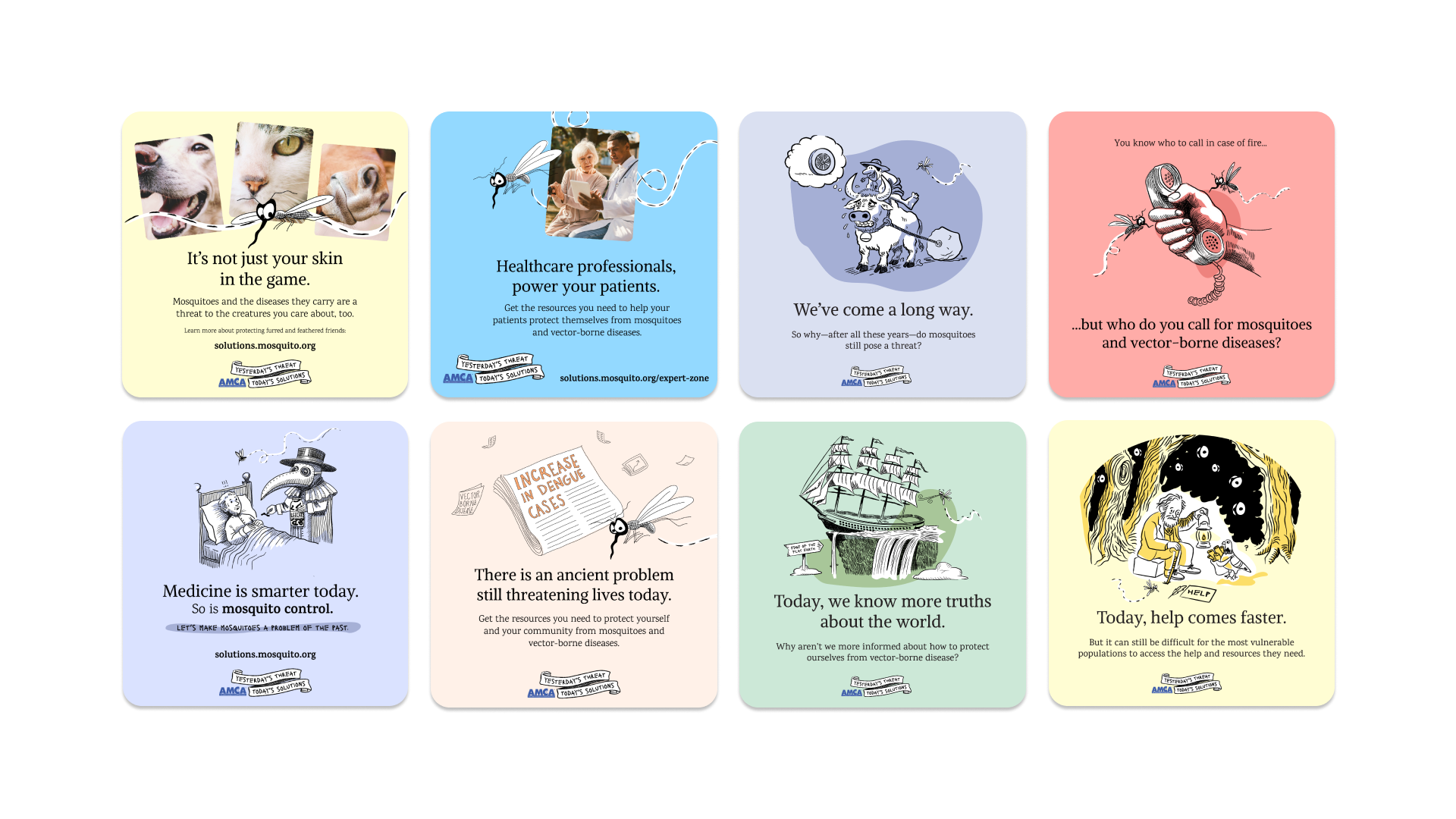


AMCA’s brief had two clear, connected goals. First, build a single, accessible clearinghouse of communications tools so mosquito professionals would not have to recreate materials for every outreach effort. This hub had to be practical for field scientists and flexible for districts with different capacities. Second, translate the technical, often “icky,” topic of mosquito control into public messaging that builds awareness for control as a routine, essential public health service, not only during crises. The RFP emphasized clear, evidence-based public messaging and guidance on pesticide applications, and the team prioritized dispelling myths while building trust.
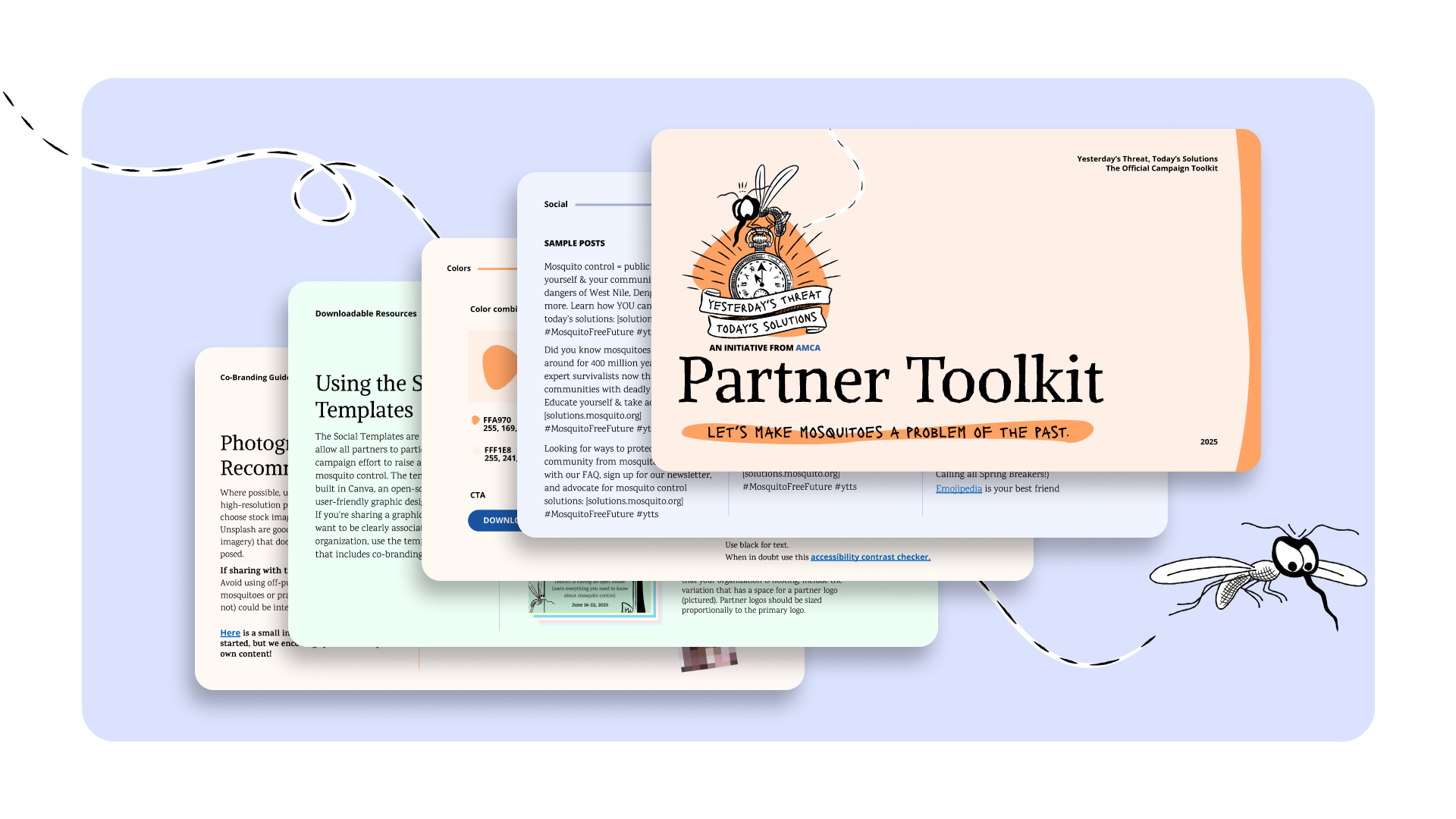
We began with audience research and a communications strategy designed to solve a dual problem: meet the needs of mosquito professionals who required rigorous, usable materials, while also creating an accessible public entry point. The team mapped user needs, framed messaging that respected the scientific work of professionals, and identified tone and design approaches that would translate in community settings. That work surfaced a simple insight that shaped the campaign: AMCA’s (important) work was largely invisible to the public. This reality guided our campaign to introduce mosquito professionals as local public-health heroes while using clever visual hooks to invite attention.
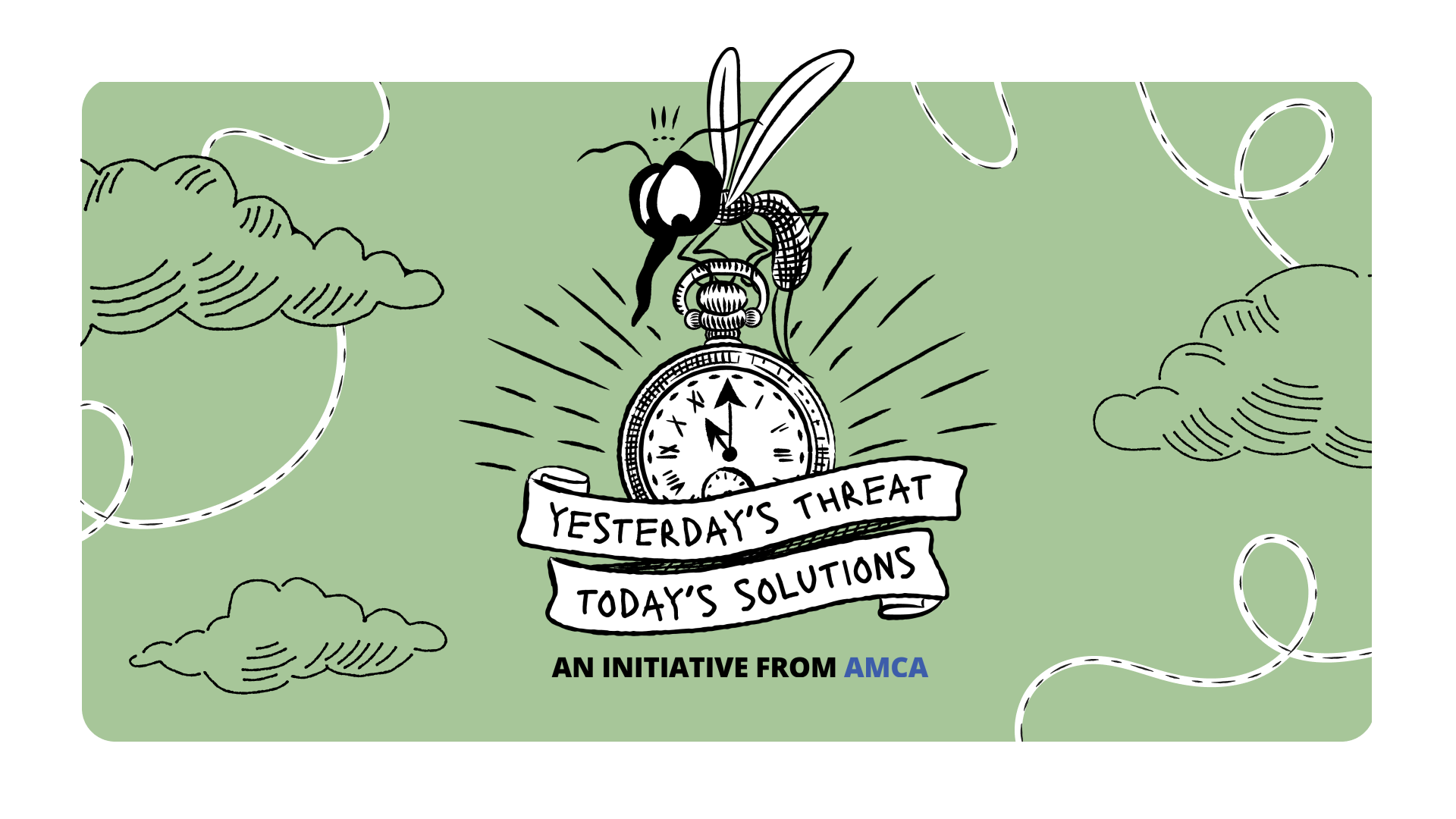
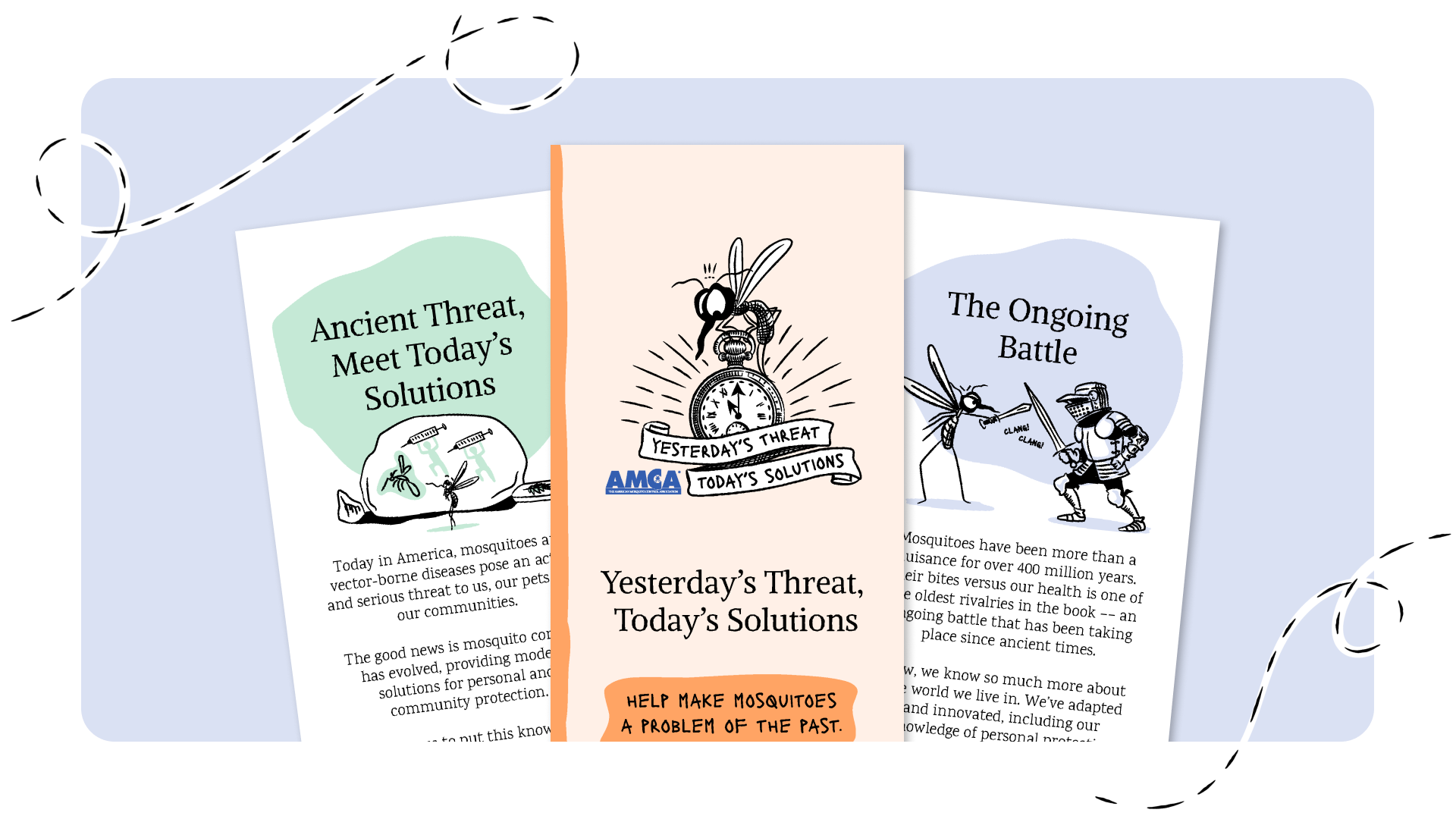
From concepting to production, the creative work balanced cleverness and credibility. Early creative explorations included playful mascots, but the team ultimately landed on a smarter tonal choice, “Yesterday’s threat, today’s solutions,” inspired by New Yorker-style cartoons. This approach used wit to lower resistance and spark curiosity, then delivered substantive messages about community responsibility and the science of control.
The campaign extended from web and social graphics to a fully branded conference experience: main-stage presentations, floor decals, large-format collateral, swag, and booth experiences that made the technical world of mosquito control feel accessible and booth visitors feel seen. The conference activation accelerated adoption across districts by putting materials directly into practitioners’ hands, and by demonstrating how the toolkit could be used in real outreach settings.

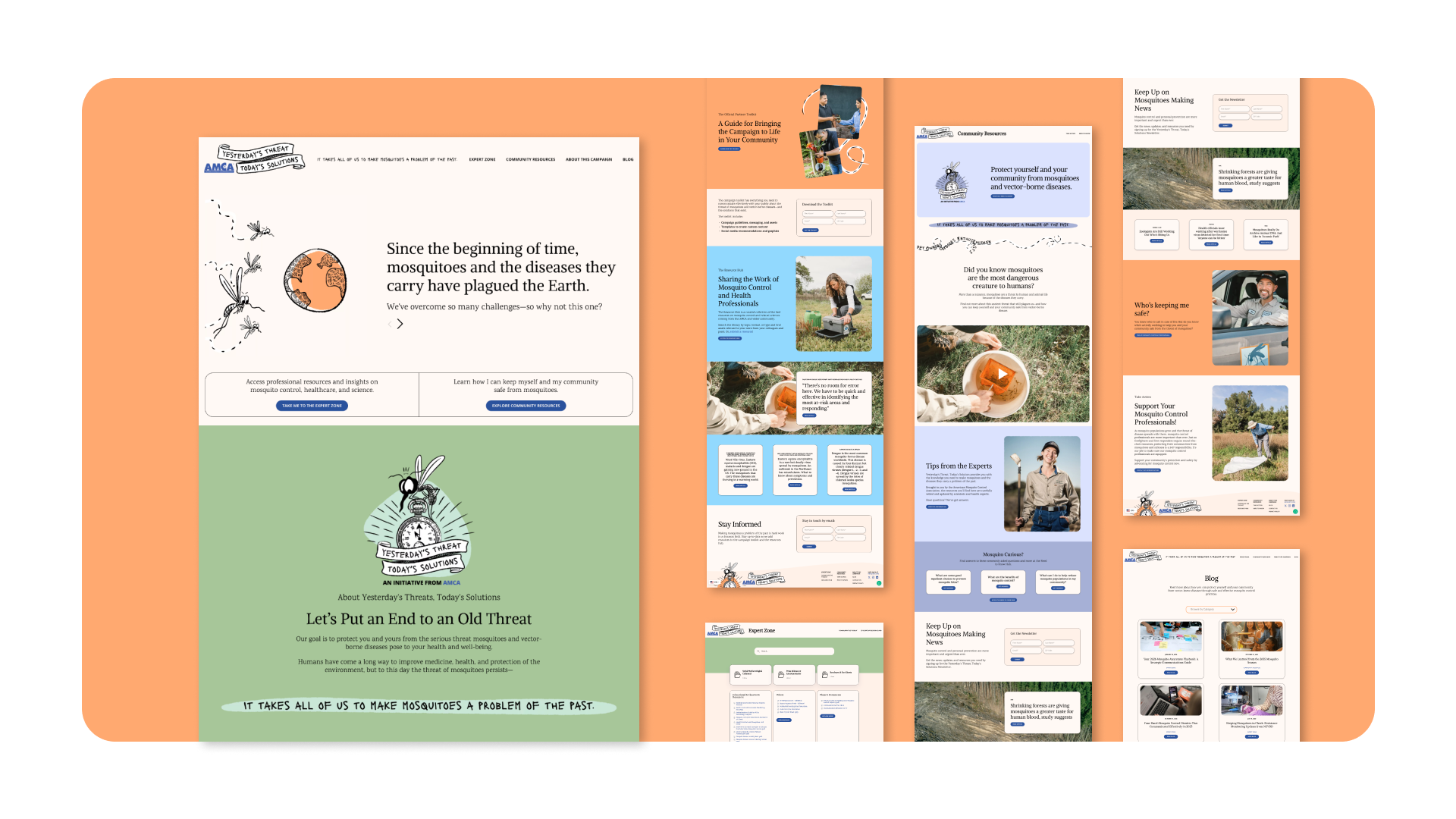
To make AMCA’s work scalable, the team built a centralized resource hub designed specifically for mosquito control professionals—a clearinghouse for communications templates, FAQs, brochures, and localized guidance that helps translate complex scientific information into accessible public messaging. The hub was intentionally ungated to ensure practitioners could quickly access and deploy materials in their districts, with features like partner listings, translation support, and an information architecture aligned to real-world communication needs.
Alongside the hub, the campaign introduced a public-facing experience tailored to community audiences. These pages focused on building awareness and trust by explaining the importance, safety, and impact of mosquito control, while offering clear actions such as finding a local professional, advocating for services, or subscribing to updates. Together, this dual approach ensured both audiences—experts and the public—had the tools and information they needed to engage effectively.
Post-launch, Media Cause supported AMCA with two parallel newsletter tracks, expert and public, and ongoing site maintenance, plus focused campaigns for public-awareness moments like World Mosquito Day. The implementation plan included measurement touchpoints and a survey plan to collect feedback from toolkit downloaders and toolkit adopters, so subsequent work could be tied to adoption and usability signals.
Alongside the resource hub, email became a critical engagement channel. Media Cause developed segmented newsletter strategies for both expert and public audiences, delivering timely, relevant content tied to key campaign moments like the start of the mosquito season. These efforts sustained engagement, drove traffic back to the hub, and encouraged deeper interaction with campaign resources.
The partnership delivered clear, measurable growth in awareness, engagement, and adoption—demonstrating that a strategically designed, audience-first campaign can scale quickly, even through primarily organic channels.
Site visitors, +600%
From May to September, site visitors increased by more than 600 percent, driven by organic search, referral traffic, and AMCA outreach—signaling rapid expansion in campaign visibility and sustained audience interest.
Toolkit adoption, 269 downloads
The campaign generated 269 total toolkit downloads, establishing the resource hub as a high-value destination for professionals and partners seeking ready-to-use communications tools.
Email engagement, 15.4% click-through rate
Campaign emails achieved a 15.4 percent click-through rate—well above industry benchmarks—demonstrating strong audience intent and meaningful engagement with campaign content.
Together, these results show that an audience-centered toolkit, paired with strong creative and strategic activation, can drive both professional adoption and public engagement at scale.
The partnership also deepened over time. AMCA entrusted the team to lead its Puerto Rico conference booth, integrate the campaign into event branding, and present on the main stage. Since launch, Media Cause has continued to manage the site, produce expert and public newsletters, and support additional CDC-funded content initiatives.
600%
increase in site visitors
269
toolkit downloads
15.4%
CTR